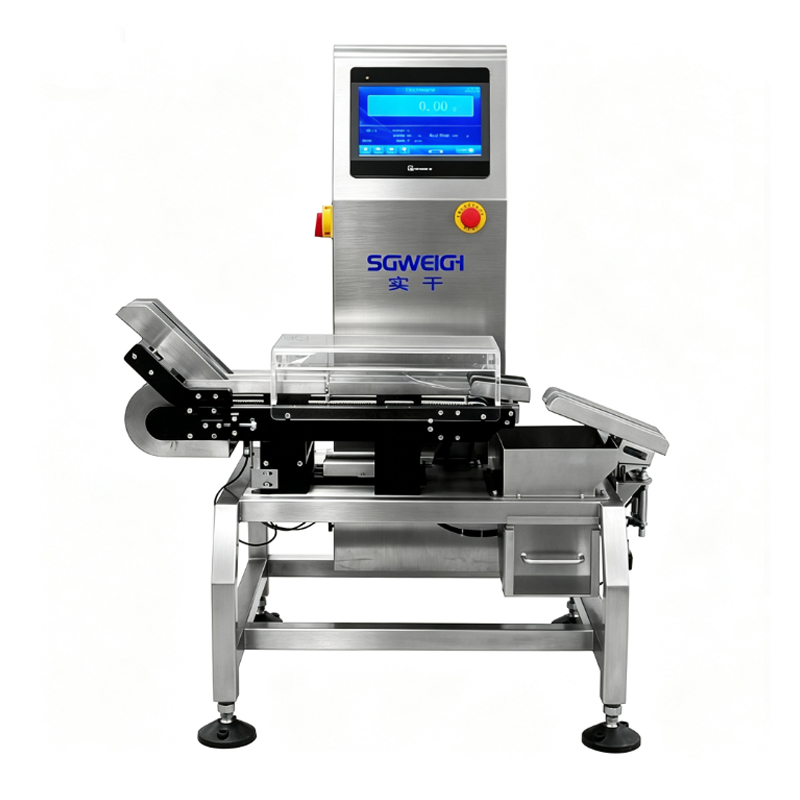
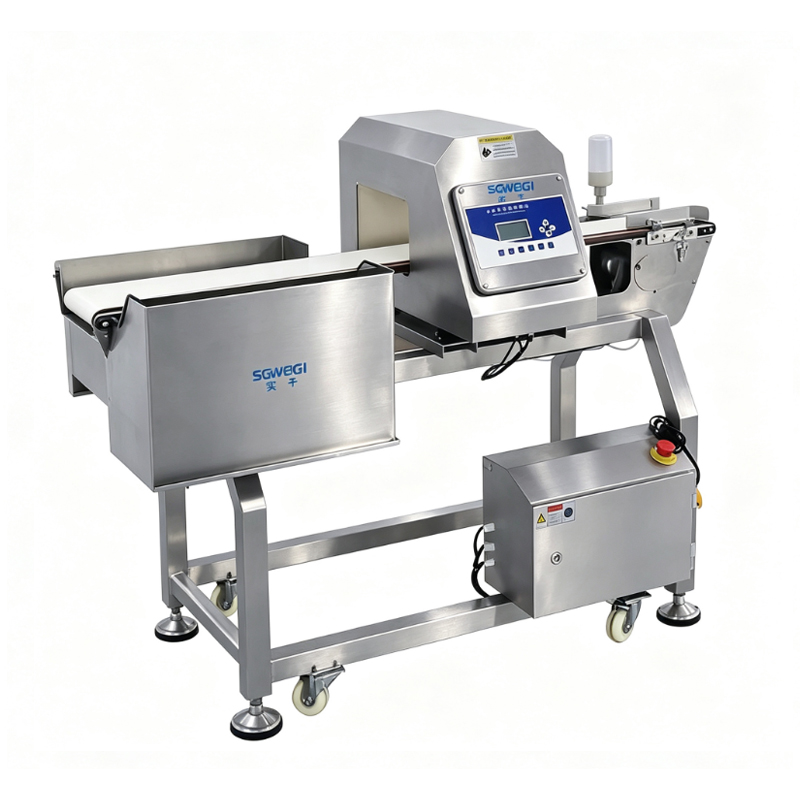
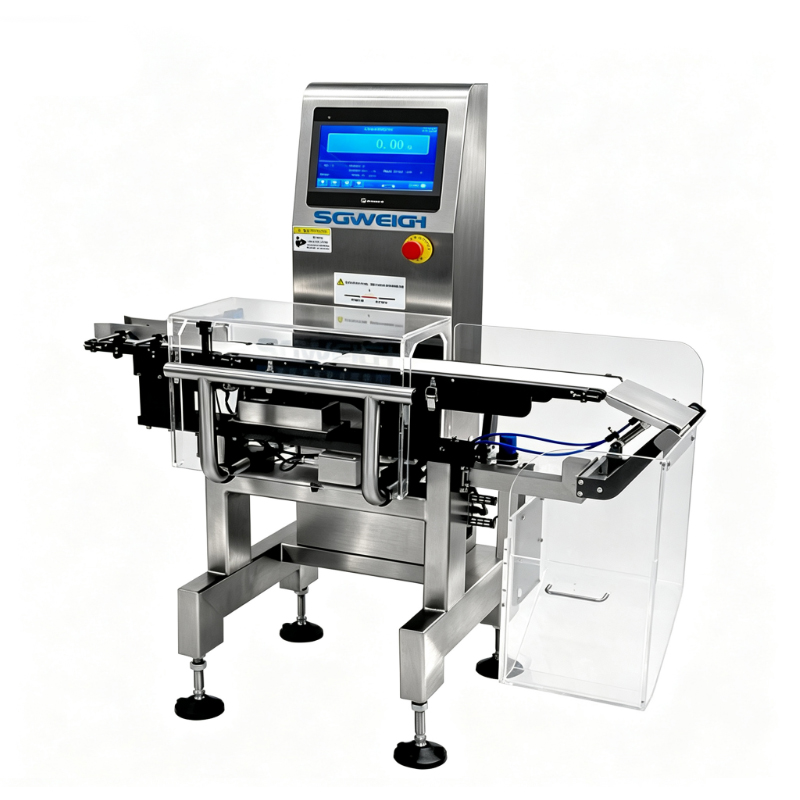
What Is a Multi-Lane Checkweigher and How Does It Work?
A multi-lane checkweigher is an automated weighing system that features multiple independent weighing channels—typically ranging from 2 to 12 lanes—operating simultaneously on a single machine frame. Unlike a conventional single-lane checkweigher that processes one product stream at a time, a multi-lane system is designed to connect directly to the discharge of a multi-lane packaging machine, weighing every stick pack, sachet, or pouch across all lanes without merging products into a single line.
If you are searching for a high-speed multi-lane checkweigher for stick packs, a multi-channel weighing system for food pharmaceutical sachets, or a compact inline checkweigher for cosmetic stickpack production, understanding how these systems work is the first step toward selecting the right equipment.
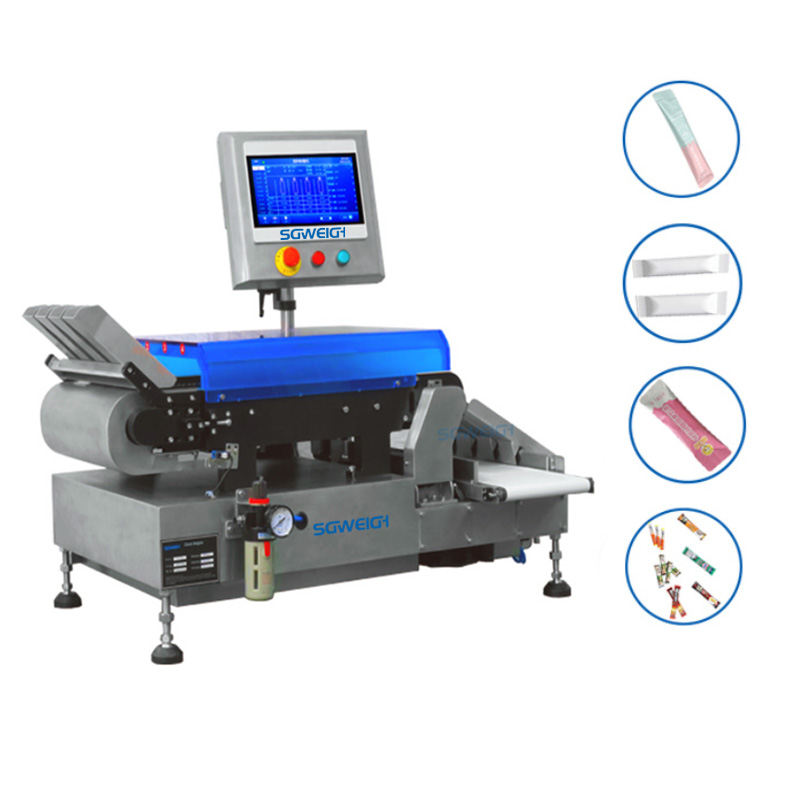
How Does a Multi-Lane Checkweigher Work?
The working principle of a multi-lane checkweigher is best understood by following the product flow from packaging to weighing to rejection.
Step 1: Direct Infeed from the Packaging Machine
Products exit the multi-lane packaging machine (such as a multi-lane VFFS or sachet filler) in parallel lanes. The checkweigher‘s infeed conveyor is designed with a matching center pitch—as narrow as 50 mm in some compact models—so each product transfers directly onto its corresponding weighing lane without the need for spreading conveyors or lateral displacement. This lane-integrity transfer preserves product orientation and eliminates handling damage.
Step 2: Independent Weighing on Each Lane
Each lane is equipped with its own precision load cell (weighing sensor). As a product passes over the weighing platform on its lane, the load cell captures the weight while the product is still in motion. The scale interval on high-precision models can be as fine as 0.01 g, with accuracy specifications reaching ±0.010 g under stable conditions. Crucially, each lane operates independently—one lane can continue running while another is stopped for adjustment or maintenance.
Step 3: Real-Time Comparison and Rejection
The checkweigher’s controller compares each weight reading against preset upper and lower limits. Products that fall outside the acceptable range are rejected by that lane’s dedicated reject mechanism. Common rejection methods for multi-lane systems include lifting rejection (where the platform lowers to let the product slide off gently) and air-blast rejection for lightweight items. Because rejection is lane-specific, a non-compliant product on Lane 3 does not interfere with the good products flowing on Lanes 1, 2, and 4.
Step 4: Feedback to the Filler
One of the most valuable functions of a multi-lane checkweigher is its ability to send per-lane weight data back to the packaging machine. If Lane 5 consistently runs light, the checkweigher can signal the filler to increase the fill volume for that specific lane, preventing giveaway and improving yield. This closed-loop feedback is far more precise than what a single-lane system can achieve, because corrections are applied lane by lane rather than to the entire production stream.
Key Components of a Multi-Lane Checkweigher
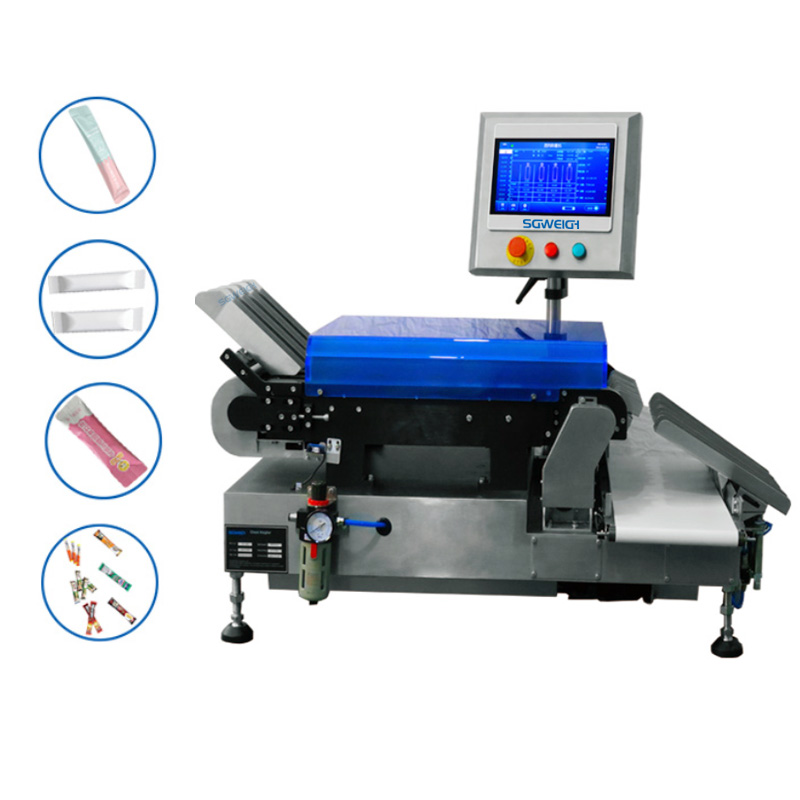
A typical multi-lane checkweigher consists of four core subsystems:
Infeed and transfer conveyors: Matched to the upstream packaging machine’s lane pitch and speed.
Independent weighing stations: One load cell and weighing conveyor per lane, with vibration-resistant designs for factory environments.
Lane-specific reject mechanisms: Lifting rejectors, air jets, or pushers configured according to product fragility and weight.
Unified control interface: A single touchscreen HMI that manages all lanes, stores product recipes, and displays per-lane statistics and trend graphs.
What Products Are Best Suited for Multi-Lane Checkweighing?
Multi-lane checkweighers excel in applications where small-format products are produced in high volumes across parallel lanes. The most common product types include:
Stick packs and sachets for coffee, sugar, seasoning, instant soup, and powdered drink mixes
Pharmaceutical sachets containing powders, granules, or dual-chamber formulations
Cosmetic stick packs such as facial mask bars and lotion samples
Small precision components requiring portion-controlled packaging
For pharmaceutical applications specifically, multi-lane checkweighers are valuable for verifying dosage accuracy in capsules, tablets, and multi-component sachets at production speeds that single-lane systems cannot match.
Why Choose a Multi-Lane Checkweigher Over Multiple Single-Lane Units?
When evaluating multi-lane checkweigher price vs. single-lane alternatives, the total cost comparison often favors the multi-lane approach. A single multi-lane machine typically costs less than purchasing multiple single-lane checkweighers to achieve the same output. It also occupies significantly less floor space, requires only one operator interface, and preserves lane integrity from packaging through weighing—eliminating the merging conveyors and product re-spreading that add mechanical complexity and handling risk.
For manufacturers running 6, 8, 10, or 12-lane packaging machines, a matching multi-lane checkweigher is usually the most space-efficient and cost-effective quality control solution.
Frequently Asked Questions
What is the typical accuracy of a multi-lane checkweigher?
High-precision models achieve ±0.010 g (3σ) for products in the 1–50 g range, with a scale interval of 0.01 g. Accuracy depends on product stability, lane speed, and environmental vibration.
How many lanes can a multi-lane checkweigher have?
Most production models range from 2 to 12 lanes, with lane pitch options typically between 50 mm and 120 mm depending on the product width and IP rating requirements.
Can each lane be set up for a different product?
Yes. On advanced models, each lane can be individually configured for different products, weight ranges, and rejection thresholds, providing flexibility for multi-product production lines.
Ready to Find the Right Multi-Lane Checkweigher for Your Line?
Whether you are weighing pharmaceutical sachets, coffee stick packs, cosmetic samples, or precision components, the right multi-lane checkweigher can transform your quality control from a bottleneck into a seamless part of your production flow.
Shanghai Shigan (SGWEIGH) manufactures multi-lane checkweighers with 2–12 lanes, 0.01 g precision, independent lane rejection, and real-time feedback to your packaging machine. We can help you match lane count, pitch, and rejection method to your specific products.
Contact us today for a free consultation and product-specific quote